

For many first-time website owners, launching a website begins with a simple idea: buy a domain, get online, and start building. But somewhere along the way, two terms often cause confusion, web hosting and domain hosting. Though they are commonly mentioned together, they play very different roles behind the scenes of every website.
Understanding the difference between these two services is one of the first and most important steps toward building a functional, reliable, and professional online presence.
The Address That Leads the Way
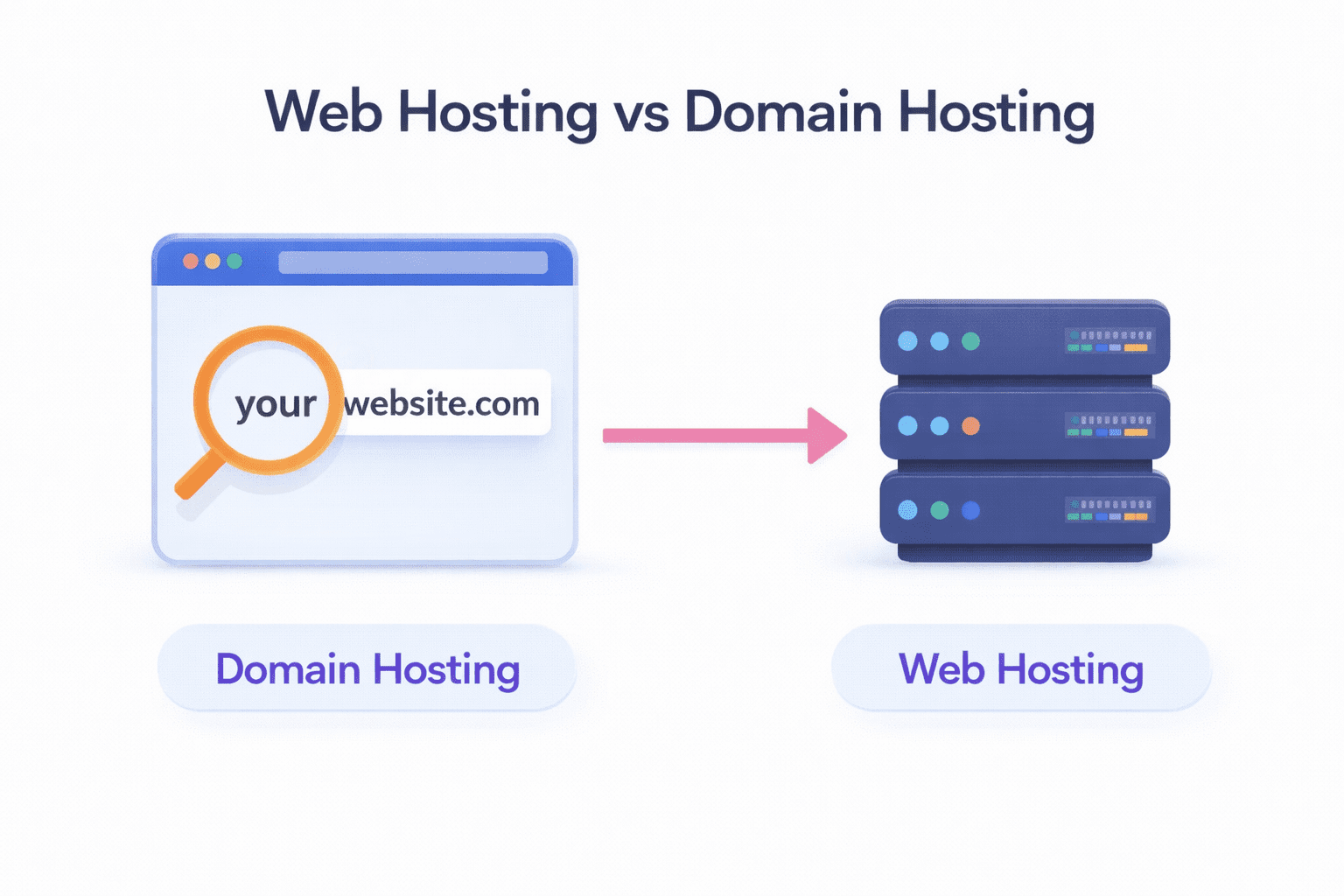
Every website starts with a domain name. A domain name is the digital address people type into their browsers to visit a website. Names like dethrills.com or google.com do not contain any website content themselves; instead, they act as pointers that guide users to the correct location on the internet.
Domain hosting, also known as domain registration, is the service that allows individuals or businesses to purchase, own, and manage these addresses. It handles important tasks such as domain registration, renewals, DNS management, and routing internet traffic to the correct server.
However, domain hosting does not store website files. Think of it as a signpost—it tells the internet where your website is located, but it does not hold the website itself.
Where the Website Actually Lives
While a domain name points the way, web hosting is where the website truly exists. Web hosting services provide space on powerful servers where all website files are stored, including text, images, videos, databases, and scripts.
When someone enters a domain name into a browser, the request is sent to the hosting server, which then delivers the website content to the visitor’s screen. Without web hosting, there would be no content to display—just an empty address.
Most web hosting services also offer additional features such as email hosting, security tools, backups, and performance optimization to keep websites running smoothly.
Two Services, One Website
Although web hosting and domain hosting serve different purposes, they work together to make a website function properly. The domain name acts as the address, while the web hosting acts as the building that holds everything inside.
It is also very common for website owners to buy these services from different providers. A domain may be registered with one company, while the website is hosted on another company’s servers. With proper DNS configuration, the domain and hosting connect seamlessly and function as one system.
Why the Distinction Matters
Confusing domain hosting with web hosting often leads to frustration, especially for beginners who expect a newly registered domain to automatically display a website. In reality, a domain without hosting has nothing to show.
Understanding the difference helps individuals and businesses:
Make better purchasing decisions Avoid unnecessary expenses Choose the right services for their needs Troubleshoot website issues more effectively
In today’s digital economy, where online presence is essential for credibility and growth, having a clear understanding of how websites work can save time, money, and stress.