
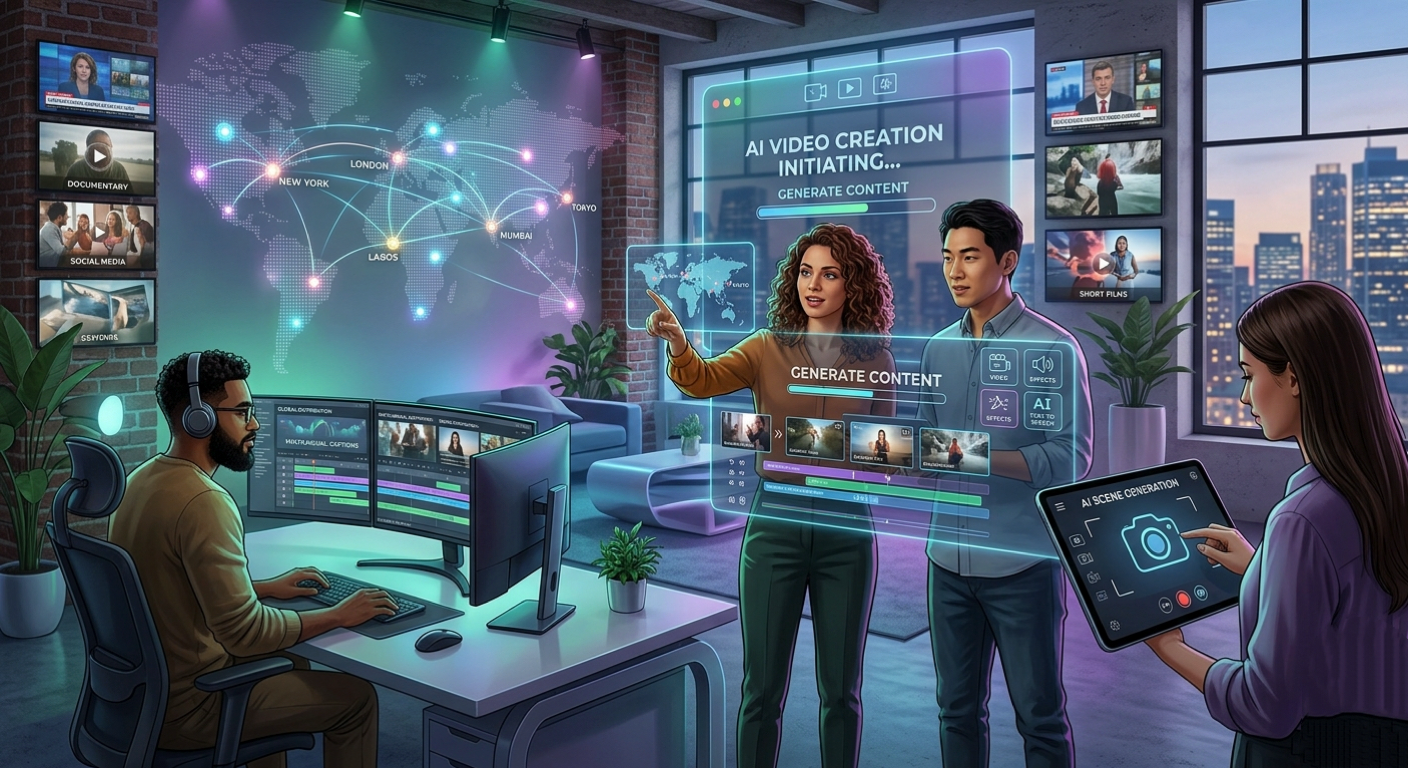

Artificial intelligence is rapidly reshaping the global content production landscape, with a new wave of AI-powered video creation tools changing how individuals and organizations produce visual media. From automated editing to full video generation from simple text prompts, the technology is gaining traction across industries.
The rise of short-form video platforms and increased demand for digital content have pushed creators and businesses to seek faster and more cost-effective production methods. In response, AI video tools are emerging as a practical solution, enabling users to generate videos without traditional filming equipment or advanced technical expertise.
Recent developments highlight the growing capabilities of AI in this space. Tools such as Google Veo, developed by Google DeepMind, are designed to generate high-quality videos from text prompts, incorporating realistic motion, detailed environments, and synchronized audio. The technology reflects a broader shift toward fully generative media systems.
Similarly, Grok AI, associated with xAI, is expanding into video generation, allowing users to create short-form visual content using text or image inputs. The system is part of a wider ecosystem of AI tools aimed at simplifying creative workflows while increasing output speed.
Another platform, Higgsfield AI, is also gaining attention for its focus on cinematic video generation. It offers features such as scene control, visual effects, and stylistic presets, positioning itself as a tool for creators seeking more advanced visual storytelling capabilities.
Industry analysts note that these tools are part of a larger trend toward automation in media production. Core features driving adoption include text-to-video generation, AI-powered voiceovers, automated editing, and the ability to animate static images. These capabilities allow users to produce content in significantly less time compared to traditional methods.
The impact is particularly evident among independent creators and small businesses, who are leveraging AI tools to compete in a crowded digital environment. By reducing production costs and simplifying workflows, AI is lowering barriers to entry and enabling wider participation in content creation.
However, the rapid growth of AI-generated video also raises concerns. Issues related to misinformation, deepfake technology, and copyright protection remain central to ongoing discussions among policymakers and technology developers. Experts emphasize the importance of transparency and responsible usage as the technology continues to evolve.
Despite these challenges, the outlook for AI video tools remains strong. Continued advancements are expected to improve video realism, extend generation length, and introduce more interactive capabilities. Integration with emerging technologies such as virtual and augmented reality could further expand their applications.
As AI continues to develop, its role in video production is expected to deepen, influencing not only how content is created but also how it is distributed and consumed. For now, the technology represents a significant shift in the media landscape, blending automation with human creativity in new and evolving ways.